
Tag: Premier League

  • The EPL Title Race: Why It’s Never Been More Unpredictable

    The EPL Title Race: Why It’s Never Been More Unpredictable

    There was a time — not that long ago — when you could predict the Premier League title race by September. The gap between the super clubs and everyone else was so vast that the season was essentially a coronation with extra steps. Two or three teams had the financial muscle, the squad depth, and the managerial quality to compete. Everyone else was playing for fourth.

    That era is over. And the Premier League is more compelling for it.

    The 2025-26 season has reinforced something that’s been building for several years: the English top flight is approaching a level of competitive balance that would have seemed impossible a decade ago. More clubs have the resources to compete. More managers have the tactical sophistication to punch above their weight. And the regulatory environment — specifically the evolution of financial fair play and profitability and sustainability rules — has begun to reshape the economics of the league in ways that narrow the advantages of the traditional elite.

    Financial Rules Changed the Game

    The introduction and enforcement of the Premier League’s Profitability and Sustainability Rules (PSR) is the single biggest structural change to the competitive landscape. For decades, the richest clubs could simply outspend their rivals into submission. Buy the best players, pay the highest wages, repeat until trophies arrive. The financial gap was the competitive gap.

    PSR hasn’t eliminated spending advantages — the biggest clubs still spend more — but it has introduced constraints that matter. Clubs can no longer run unlimited losses chasing success. Transfer fees and wages have to be balanced against revenue. And the penalties for non-compliance — points deductions, transfer embargoes — are severe enough that even wealthy owners think twice before writing blank cheques.

    The practical effect has been a compression of spending. The gap between the biggest spenders and the middle tier has narrowed. Clubs that were previously priced out of top-tier talent can now compete for the same players, because the traditional elite can’t simply outbid everyone by fifty percent anymore.

    The Coaching Revolution

    Money matters, but it’s not the only factor that determines competitiveness. The Premier League has experienced a quiet revolution in coaching quality over the past five years, and its effects are visible in the table.

    The days when mid-table clubs employed journeyman managers who played reactive, unambitious football are largely gone. The current generation of Premier League managers — across the table, not just at the top — are tactically sophisticated, analytically literate, and ambitious. They press. They build from the back. They have defined playing identities. They develop players.

    This matters because it means that well-coached teams with inferior squads can consistently take points off better-resourced opponents. The tactical margins have narrowed alongside the financial margins. A club with a good coach, a clear identity, and players who fit the system can compete with anyone on any given weekend — and increasingly over a full season.

    Squad Depth Is the New Battleground

    The modern Premier League season is an endurance test. Between the league, domestic cups, and European competition, top clubs play upwards of fifty matches a season. That volume of fixtures exposes a truth that financial dominance used to obscure: depth matters more than peak quality.

    It doesn’t matter if you have the best starting eleven in the league if your bench can’t maintain standards when injuries and fatigue inevitably hit. And this is where the traditional elite’s advantage has eroded most dramatically. Mid-table clubs have improved their depth. Recruitment analytics have helped smaller clubs identify undervalued players who can contribute at a high level. Loan markets and sell-on clauses have created more fluid player movement.

    The result is that the traditional top clubs can no longer assume they’ll have a significant depth advantage over the rest of the league. Some weeks, they will. But over a 38-game season, the cumulative effect of marginal improvements across the league is that nobody can coast.

    The Death of the Two-Horse Race

    Previous eras of the Premier League often boiled down to a two-team fight. Arsenal and Manchester United in the late 1990s and early 2000s. Chelsea and the rest after Abramovich arrived. Manchester City’s gradual ascent to dominance. Liverpool’s challenge under Klopp. In each case, the title race was fundamentally a bilateral contest with occasional interlopers.

    That model has broken down. The current landscape features multiple credible contenders — not just two. And critically, the identity of those contenders is less predictable from season to season. A club that finishes seventh one year can genuinely challenge for the top four the next, if they recruit well, keep their manager, and avoid injury crises.

    This unpredictability is the Premier League’s greatest commercial asset and its greatest sporting achievement. No fan base starts the season knowing their team can’t compete. That hope — even when it’s unrealistic — drives engagement, ticket sales, and broadcast interest in a way that a predictable league simply can’t match.

    The European Factor

    The Champions League and Europa League add another layer of complexity to the domestic title race. The expanded Champions League format means more matches, more travel, more fatigue, and more squad rotation. For the clubs competing in Europe, the domestic season becomes a juggling act — and some inevitably drop balls.

    For clubs not in European competition, the advantage is clear: a full week between Premier League matches to prepare, recover, and refine. That advantage accumulates over a season, and it’s one of the reasons why clubs on the periphery of European qualification often perform better domestically than clubs who are actually in Europe.

    The new Champions League format has amplified this dynamic. More group-stage matches mean more weeks where European clubs are playing midweek while domestic-only clubs are resting. Over 38 league games, that adds up.

    What This Means for the Jamaican Football Fan

    Let’s be real — the EPL is massive in Jamaica. Walk into any bar, barber shop, or taxi and you’ll find someone with a strong opinion about Arsenal, Manchester United, Liverpool, or Chelsea. The Premier League is the most-watched football competition on the island, and its unpredictability is part of what makes it so compelling for Jamaican audiences.

    But beyond the entertainment value, there’s a lesson here for Jamaican football. The EPL’s increased competitiveness wasn’t an accident. It was the product of structural changes — financial regulation, improved coaching standards, better recruitment practices — that deliberately narrowed the gap between rich and poor. The league didn’t just hope for competitive balance. It created the conditions for it.

    Jamaican football could learn from that approach. Competitive balance doesn’t emerge naturally. It has to be designed, enforced, and maintained. Whether it’s the Jamaica Premier League or the national team programme, the principle is the same: sustained structural investment produces better competition, which produces better players, which produces better results.

    The Verdict

    The Premier League title race in 2025-26 is the most unpredictable it’s been in the modern era. Financial regulation has compressed spending gaps. Coaching quality has spread across the table. Squad depth has become more evenly distributed. European competition has created fatigue-based advantages for domestic-only clubs.

    The result is a league where genuine surprises are not just possible but probable. Where the question in August isn’t just who will win the title? but how many teams will be in the race come March? Where every weekend produces results that shift the narrative.

    For fans — in Jamaica and around the world — this is the best version of the Premier League. Unpredictable, competitive, and endlessly debatable. Long may it last.

  • Jamaicans in the EPL: A New Generation Is Emerging

    Jamaicans in the EPL: A New Generation Is Emerging

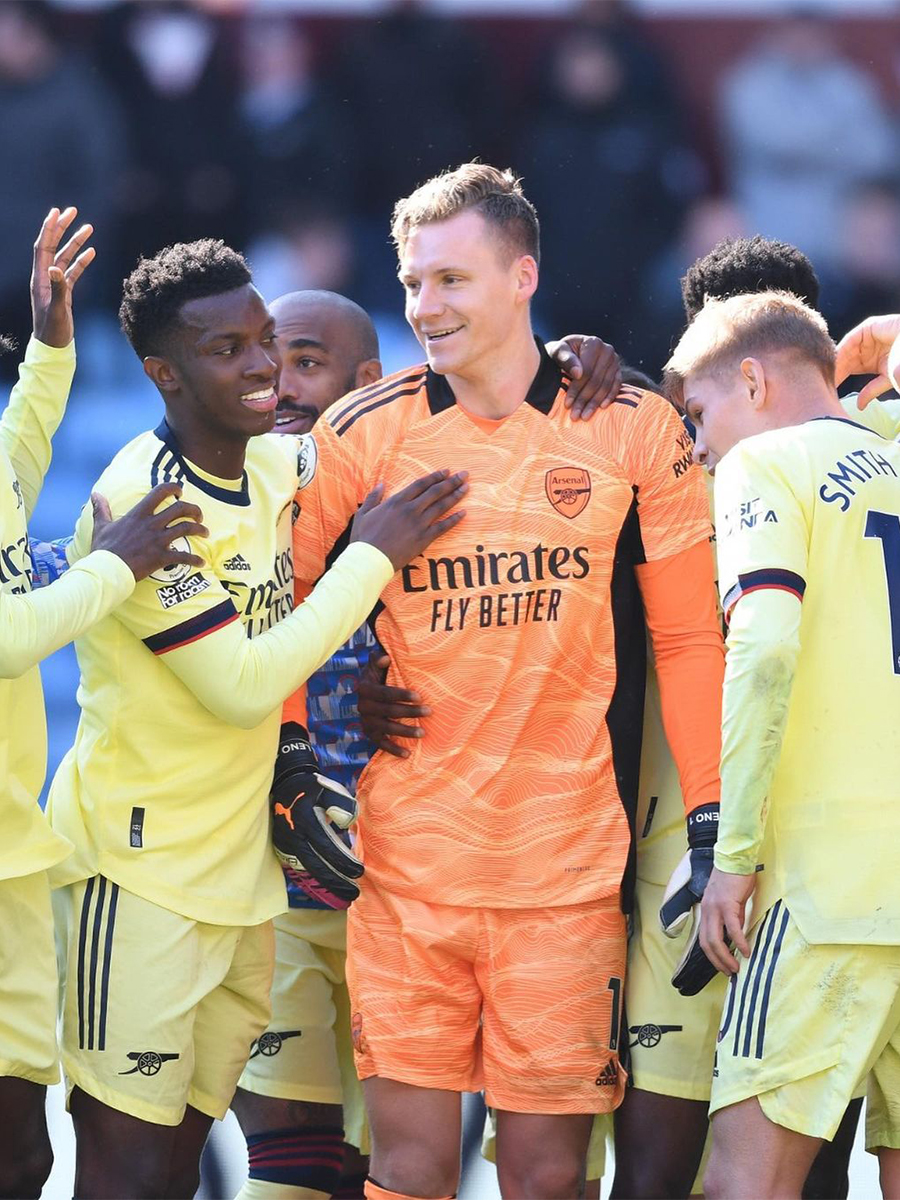
    For decades, when people talked about Jamaicans in English football, the conversation began and ended with a handful of names. The pioneers who cracked the door open in eras when Caribbean players were curiosities, not commodities. Those days are gone. A new generation of Jamaican and Jamaican-heritage players is establishing itself across the English football pyramid, and the pipeline is only getting stronger.

    This is not an accident. It is the product of shifting regulations, improved national team performance, and a diaspora network that is finally bearing fruit at scale.

    The Dual-National Pipeline

    The single biggest factor driving the increase in Jamaican representation in English football is the dual-national pathway. The United Kingdom is home to one of the largest Jamaican diaspora communities in the world, concentrated heavily in London, Birmingham, Manchester, and Bristol. For generations, children of Jamaican parents have grown up in the English football system, trained by English academies, developed within English youth structures.

    What has changed is eligibility and willingness. FIFA’s rules around national team switching and the broadening of eligibility criteria have made it easier for players with Jamaican heritage to represent the Reggae Boyz or Reggae Girlz. And critically, the Jamaican Football Federation — for all its other shortcomings — has been active in identifying and recruiting dual-nationals.

    The result is a virtuous cycle. As more dual-national players commit to Jamaica, the national team becomes more competitive. As the national team becomes more competitive, it raises Jamaica’s footballing profile, which in turn makes it easier to attract the next wave of dual-nationals. Players see teammates and peers choosing Jamaica and performing well at international level, and that normalises the decision.

    The Work Permit Factor

    Post-Brexit, the English football work permit system fundamentally changed for foreign players. The new Governing Body Endorsement (GBE) system uses a points-based approach that considers a player’s national team ranking, among other factors. Jamaica’s FIFA ranking, which has generally trended upward over the past several years thanks in part to the influx of quality dual-national players, directly impacts the ability of Jamaican-passport holders to obtain work permits for English football.

    This creates another virtuous cycle: a better national team ranking makes it easier for Jamaican players to get work permits, which means more Jamaican players in English football, which means more experience and exposure for players who represent Jamaica, which helps the national team perform better and maintain a higher ranking.

    The system is far from perfect — it still disadvantages players from smaller football nations compared to those from FIFA’s traditional powerhouses — but it has opened doors that were previously shut for Jamaican players who did not hold British passports.

    Beyond the Premier League

    While the Premier League gets the headlines, the real depth of Jamaican talent in English football is in the Championship, League One, and League Two. Across the English Football League, Jamaican and Jamaican-heritage players are becoming a regular presence, not a novelty. This matters enormously for the development pipeline.

    Not every player is going to crack a Premier League squad immediately. But a Jamaican midfielder getting regular minutes in the Championship, or a young forward cutting his teeth in League One, is gaining the kind of professional experience that simply does not exist in the domestic Jamaican football structure. These players return to national team duty sharper, more tactically mature, and better prepared for the demands of international football.

    The Championship, in particular, has become something of a sweet spot. The quality is high enough to genuinely develop players, but the financial and competitive barriers to entry are lower than the Premier League. Several Jamaican internationals have used strong Championship campaigns as springboards to top-flight moves, and that pathway is now well-established.

    The Historical Context

    To appreciate where things stand now, you have to understand where they were. Jamaican footballers in England were, for much of the twentieth century, isolated cases rather than part of a pipeline. Players of Jamaican heritage who grew up in England often had little connection to Jamaican football institutions. They were English players who happened to have Jamaican roots, and the idea of representing Jamaica internationally was either not on their radar or not practically feasible.

    The 1998 World Cup, when the Reggae Boyz qualified for France and captured the imagination of the entire Caribbean, was the first major inflection point. Suddenly, Jamaican football was visible on the global stage, and players of Jamaican heritage in England began to consider the possibility of representing their parents’ homeland. But the momentum from 1998 was not sustained. The national team’s fortunes fluctuated, the domestic league remained underdeveloped, and the pipeline dried up.

    What we are seeing now is the second wave, and it is built on stronger foundations. The dual-national recruitment is more systematic, the national team is more consistently competitive, and the work permit pathways are clearer. This is not a one-off surge driven by a single tournament qualification. It is a structural shift.

    What It Means for Jamaican Football

    The increasing presence of Jamaican players in English football has implications far beyond individual careers. It means that when Jamaica plays international matches, the squad is filled with players who are competing weekly at a high professional level. That was not always the case, and the difference in quality is noticeable.

    It also means that young footballers in Jamaica can see a viable professional pathway that does not require leaving the island at fourteen and hoping for the best. The dual-national route, combined with the growing network of Jamaican players already established in England, creates a support structure that did not exist a generation ago. Young players can be identified, mentored, and connected to opportunities through channels that are now well-worn rather than speculative.

    And frankly, it is good for the culture. Seeing Jamaican names on the teamsheets of English football clubs — hearing commentators pronounce Jamaican surnames on Match of the Day — reinforces the reality that Jamaica is a footballing nation, not just a sprinting nation. That narrative shift matters for investment, for grassroots development, and for the self-image of Jamaican football as a whole.

    The Road Ahead

    The current generation is laying groundwork that the next generation will build on. As more Jamaican players establish themselves in English football, the pathway becomes more normalised, the networks become stronger, and the talent pool deepens. The goal is not just to have Jamaicans in the EPL. The goal is to have Jamaicans thriving in the EPL as a matter of course, not as a headline.

    We are not there yet. But the trajectory is unmistakable, and for the first time in a long while, the future of Jamaican football in England looks genuinely bright. A new generation is emerging, and they are not asking for permission.

    They are simply taking their place.

  • Why the EPL Is Still King — And What Threatens Its Throne

    Why the EPL Is Still King — And What Threatens Its Throne

    Turn on your television on a Saturday morning in Kingston, or Montego Bay, or Mandeville, and you’ll see the same thing in every bar, every barbershop, every living room with a screen. The Premier League. Not La Liga. Not Serie A. Not the Bundesliga. The English Premier League, broadcasting its drama into every corner of the globe with a reach that no other domestic football league comes close to matching.

    In Jamaica, the EPL isn’t just popular. It’s embedded. Arsenal and Manchester United jerseys outnumber Reggae Boyz shirts on the street. Children grow up knowing the Premier League table before they learn parish capitals. The league’s grip on the Jamaican sports consciousness — and indeed the global sports consciousness — is so total that it feels permanent.

    But nothing in football is permanent. And for the first time in the EPL’s modern era, there are genuine threats to its throne. The question is whether any of them are serious enough to topple it.

    The Revenue Machine

    Understanding the EPL’s dominance starts with understanding its economics. The league’s broadcasting deals are staggering — generating billions in domestic and international television revenue that dwarfs what any other league can command. This revenue flows down to clubs in a relatively equitable distribution model, which means even the league’s smaller clubs are wealthy by international standards.

    This financial structure creates a self-reinforcing cycle. More money attracts better players. Better players create more compelling football. More compelling football drives higher viewership. Higher viewership commands larger broadcasting deals. And the cycle continues.

    The genius of the Premier League model is that it monetised unpredictability. In Spain, two or three clubs dominate. In Germany, one club has won the league almost every year for over a decade. In France, the story is similar. But in England, any team can beat any other team on any given weekend. That competitive balance — whether real or perceived — is the product the EPL sells, and the global market is buying.

    Threat #1: The Saudi Pro League

    When Saudi Arabia began pouring sovereign wealth into its domestic football league, the initial reaction from the EPL establishment was dismissive. A vanity project. A retirement league. A flash in the pan.

    That dismissal was premature. The Saudi Pro League has demonstrated a willingness to spend at levels that even the wealthiest Premier League clubs cannot match, backed by state resources that are effectively limitless. The league has attracted marquee names and shows no signs of slowing down its investment.

    But does Saudi money genuinely threaten the EPL? The answer is nuanced. The Saudi league can outbid individual clubs for individual players. It can offer tax-free salaries that make a Premier League contract look modest by comparison. What it cannot yet offer is the competitive environment, the global broadcasting audience, or the cultural prestige that the EPL provides.

    For now, the Saudi league functions as a talent drain at the margins — primarily attracting players in their late careers or those who prioritise financial reward over competitive legacy. The day it starts attracting 25-year-old players at the peak of their careers, choosing Riyadh over London or Manchester without hesitation — that’s when the EPL should worry. And that day is closer than most people in English football would like to admit.

    Threat #2: La Liga’s Quiet Resurgence

    Spanish football has spent the last several years in an identity crisis. The Messi-Ronaldo era that made El Clasico the most-watched club football event on earth ended, and La Liga’s global profile dipped noticeably. The league’s broadcasting revenue fell behind the EPL’s, and the gap between Barcelona and Real Madrid and the rest of the league remained a structural weakness.

    But write off La Liga at your peril. Spanish football has arguably the deepest coaching culture in the world. Its youth development systems — from La Masia to Villarreal’s academy to the network of smaller clubs that consistently produce technically elite players — remain the gold standard. And the Spanish national team’s continued success at international tournaments demonstrates that the talent pipeline is healthy.

    La Liga’s challenge is not quality. It’s distribution. The league needs to solve its competitive balance problem and its broadcasting revenue gap with the EPL. If it does — and there are signs that reforms are underway — it has the football quality to compete for global attention.

    Threat #3: MLS and the American Football Project

    The most underestimated long-term threat to the EPL’s global dominance might be MLS. Not because MLS is a better league — it isn’t, and won’t be for some time. But because the United States represents the largest untapped football market in the world, and American sports business infrastructure is arguably the most sophisticated on the planet.

    When American media companies, sports franchises, and tech platforms fully commit to growing domestic football — and they are committing, steadily and strategically — the implications for the global football economy are profound. American clubs have already begun building academies, signing younger international talent, and investing in the kind of content production and digital engagement that the EPL currently leads.

    The EPL’s advantage in America has always been that it filled a void. Americans who wanted high-quality club football watched the Premier League because there was no compelling domestic alternative. As MLS improves — and it is improving, year by year — that advantage erodes. It won’t happen overnight. But the trajectory is clear.

    Threat #4: The Broadcasting Bubble

    Here’s the threat that the EPL would prefer you didn’t think about too carefully. The league’s entire economic model depends on broadcasting revenue growing — or at least maintaining — with each new cycle. But the media landscape is fragmenting. Traditional television viewership is declining globally. Streaming platforms are competing aggressively for sports rights, but their willingness to pay the premiums that linear broadcasters have historically paid is not guaranteed.

    The next EPL broadcasting cycle will be a critical test. If revenue plateaus — or worse, declines — the economic engine that powers the league’s dominance will sputter. Clubs that have built their financial models on the assumption of ever-increasing broadcast income will face painful adjustments. And the competitive balance that makes the EPL unique will be threatened as wealthier clubs pull further ahead of those more dependent on shared television revenue.

    This is not a distant hypothetical. The broadcasting market is shifting now. And the EPL’s position, while strong, is not immune to the same forces disrupting media economics everywhere else.

    What Keeps the EPL on Top

    Despite all of these threats, the EPL retains advantages that are extraordinarily difficult to replicate.

    Cultural infrastructure. English football stadiums, traditions, and fan culture provide an atmosphere and authenticity that newer leagues simply cannot manufacture. You can build a state-of-the-art stadium in Riyadh. You cannot build Anfield’s history or Old Trafford’s aura.

    Time zone advantage. The EPL plays at times that are accessible to audiences in Europe, Africa, Asia, and the Americas. This is a geographical accident, but it’s a significant competitive advantage in a global broadcasting market. Jamaican fans can watch live matches at reasonable hours — not so with most Asian league fixtures.

    The English language. The global dominance of English as a media language gives the EPL a natural advantage in content production, social media engagement, and cultural penetration. Players, managers, and pundits communicate in the world’s most widely spoken second language.

    Competitive unpredictability. This remains the EPL’s killer feature. In a given season, the league champion might be decided on the final day. Relegation battles are dramatic. Mid-table clubs can beat title contenders on any given weekend. This manufactured chaos is addictive viewing, and no other major league produces it as consistently.

    The Verdict from Yard

    Here in Jamaica, the EPL’s dominance feels unshakeable. It’s woven into our sporting culture in a way that goes beyond mere preference — it’s tribal. Families are divided by club allegiances that are passed down through generations. The idea that Jamaicans might one day stop watching the Premier League feels absurd.

    But dominance is not destiny. The EPL sits on a throne built on broadcasting revenue, competitive balance, and cultural prestige. All three are under pressure from forces that are real, measurable, and accelerating. The league is still king. But kings who assume they’ll reign forever tend to be the ones who lose their crowns.

    The smartest thing the EPL can do is behave as if the threats are real — because they are. And the next five years will determine whether the Premier League adapts and extends its reign, or whether it becomes the latest chapter in football’s long history of empires that believed they were too big to fall.