Author: Lastarda Lee

  • Jamaicans in the EPL: A New Generation Is Emerging

    Jamaicans in the EPL: A New Generation Is Emerging

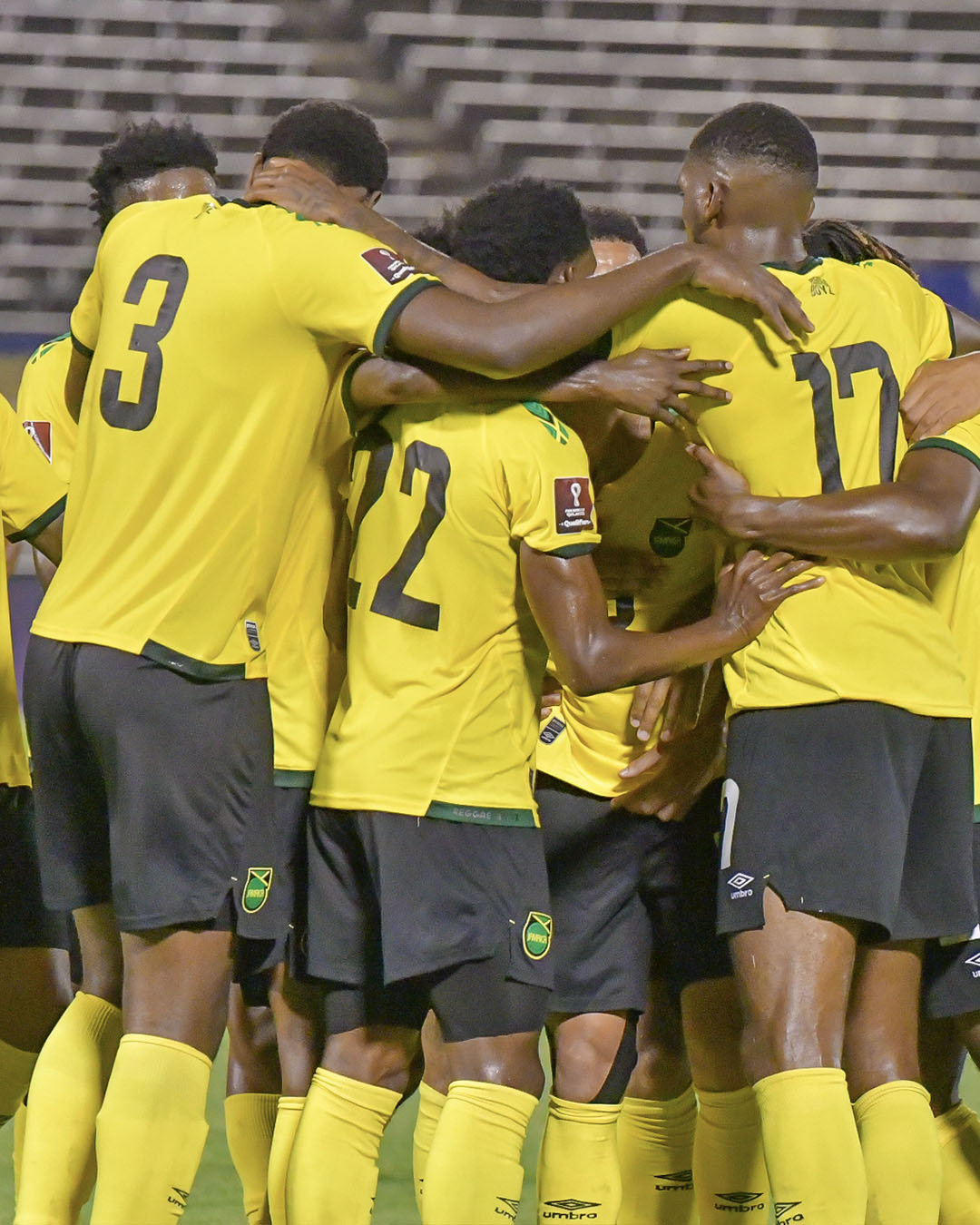
    For decades, when people talked about Jamaicans in English football, the conversation began and ended with a handful of names. The pioneers who cracked the door open in eras when Caribbean players were curiosities, not commodities. Those days are gone. A new generation of Jamaican and Jamaican-heritage players is establishing itself across the English football pyramid, and the pipeline is only getting stronger.

    This is not an accident. It is the product of shifting regulations, improved national team performance, and a diaspora network that is finally bearing fruit at scale.

    The Dual-National Pipeline

    The single biggest factor driving the increase in Jamaican representation in English football is the dual-national pathway. The United Kingdom is home to one of the largest Jamaican diaspora communities in the world, concentrated heavily in London, Birmingham, Manchester, and Bristol. For generations, children of Jamaican parents have grown up in the English football system, trained by English academies, developed within English youth structures.

    What has changed is eligibility and willingness. FIFA’s rules around national team switching and the broadening of eligibility criteria have made it easier for players with Jamaican heritage to represent the Reggae Boyz or Reggae Girlz. And critically, the Jamaican Football Federation — for all its other shortcomings — has been active in identifying and recruiting dual-nationals.

    The result is a virtuous cycle. As more dual-national players commit to Jamaica, the national team becomes more competitive. As the national team becomes more competitive, it raises Jamaica’s footballing profile, which in turn makes it easier to attract the next wave of dual-nationals. Players see teammates and peers choosing Jamaica and performing well at international level, and that normalises the decision.

    The Work Permit Factor

    Post-Brexit, the English football work permit system fundamentally changed for foreign players. The new Governing Body Endorsement (GBE) system uses a points-based approach that considers a player’s national team ranking, among other factors. Jamaica’s FIFA ranking, which has generally trended upward over the past several years thanks in part to the influx of quality dual-national players, directly impacts the ability of Jamaican-passport holders to obtain work permits for English football.

    This creates another virtuous cycle: a better national team ranking makes it easier for Jamaican players to get work permits, which means more Jamaican players in English football, which means more experience and exposure for players who represent Jamaica, which helps the national team perform better and maintain a higher ranking.

    The system is far from perfect — it still disadvantages players from smaller football nations compared to those from FIFA’s traditional powerhouses — but it has opened doors that were previously shut for Jamaican players who did not hold British passports.

    Beyond the Premier League

    While the Premier League gets the headlines, the real depth of Jamaican talent in English football is in the Championship, League One, and League Two. Across the English Football League, Jamaican and Jamaican-heritage players are becoming a regular presence, not a novelty. This matters enormously for the development pipeline.

    Not every player is going to crack a Premier League squad immediately. But a Jamaican midfielder getting regular minutes in the Championship, or a young forward cutting his teeth in League One, is gaining the kind of professional experience that simply does not exist in the domestic Jamaican football structure. These players return to national team duty sharper, more tactically mature, and better prepared for the demands of international football.

    The Championship, in particular, has become something of a sweet spot. The quality is high enough to genuinely develop players, but the financial and competitive barriers to entry are lower than the Premier League. Several Jamaican internationals have used strong Championship campaigns as springboards to top-flight moves, and that pathway is now well-established.

    The Historical Context

    To appreciate where things stand now, you have to understand where they were. Jamaican footballers in England were, for much of the twentieth century, isolated cases rather than part of a pipeline. Players of Jamaican heritage who grew up in England often had little connection to Jamaican football institutions. They were English players who happened to have Jamaican roots, and the idea of representing Jamaica internationally was either not on their radar or not practically feasible.

    The 1998 World Cup, when the Reggae Boyz qualified for France and captured the imagination of the entire Caribbean, was the first major inflection point. Suddenly, Jamaican football was visible on the global stage, and players of Jamaican heritage in England began to consider the possibility of representing their parents’ homeland. But the momentum from 1998 was not sustained. The national team’s fortunes fluctuated, the domestic league remained underdeveloped, and the pipeline dried up.

    What we are seeing now is the second wave, and it is built on stronger foundations. The dual-national recruitment is more systematic, the national team is more consistently competitive, and the work permit pathways are clearer. This is not a one-off surge driven by a single tournament qualification. It is a structural shift.

    What It Means for Jamaican Football

    The increasing presence of Jamaican players in English football has implications far beyond individual careers. It means that when Jamaica plays international matches, the squad is filled with players who are competing weekly at a high professional level. That was not always the case, and the difference in quality is noticeable.

    It also means that young footballers in Jamaica can see a viable professional pathway that does not require leaving the island at fourteen and hoping for the best. The dual-national route, combined with the growing network of Jamaican players already established in England, creates a support structure that did not exist a generation ago. Young players can be identified, mentored, and connected to opportunities through channels that are now well-worn rather than speculative.

    And frankly, it is good for the culture. Seeing Jamaican names on the teamsheets of English football clubs — hearing commentators pronounce Jamaican surnames on Match of the Day — reinforces the reality that Jamaica is a footballing nation, not just a sprinting nation. That narrative shift matters for investment, for grassroots development, and for the self-image of Jamaican football as a whole.

    The Road Ahead

    The current generation is laying groundwork that the next generation will build on. As more Jamaican players establish themselves in English football, the pathway becomes more normalised, the networks become stronger, and the talent pool deepens. The goal is not just to have Jamaicans in the EPL. The goal is to have Jamaicans thriving in the EPL as a matter of course, not as a headline.

    We are not there yet. But the trajectory is unmistakable, and for the first time in a long while, the future of Jamaican football in England looks genuinely bright. A new generation is emerging, and they are not asking for permission.

    They are simply taking their place.
  • Is the JPL Ready for a Franchise Model?

    Is the JPL Ready for a Franchise Model?

    Every few years, the debate resurfaces in Jamaican football circles: should the Jamaica Premier League abandon the traditional promotion/relegation system and adopt a franchise model? It is a question that provokes passionate responses on both sides, and it deserves a serious examination rather than the reflexive dismissal it usually gets from football purists.

    The case for a franchise model is not as outlandish as traditionalists would have you believe. But it is not the slam dunk that reformists suggest either. The truth, as usual, is complicated.

    What the CPL Got Right

    Any discussion of franchise-based Caribbean sports leagues has to start with the Caribbean Premier League in cricket. The CPL has been, by most measures, a success story. It brought corporate investment into a sport that was haemorrhaging interest across the Caribbean. It created a television product that attracts international viewers. It gave Caribbean cricketers a viable professional league on home soil. And it did all of this through a franchise model that provided the financial stability and predictability that traditional Caribbean cricket structures could not.

    The CPL’s franchises have fixed locations, corporate ownership structures, brand identities designed for the television age, and — critically — no threat of relegation to disincentivise investment. Owners know that their franchise will exist next season regardless of results, which makes them more willing to invest in infrastructure, marketing, and player development.

    That stability is the core appeal of the franchise model for Jamaican football. The JPL has historically struggled to attract and retain corporate sponsors, and one of the primary reasons is risk. Why would a company invest significant marketing budget into a club that might get relegated and disappear from the top flight? The franchise model eliminates that risk.

    The Promotion/Relegation Defence

    Football purists — and there are many in Jamaica — will argue that promotion and relegation is the soul of the sport. It provides jeopardy, narrative, and a meritocratic pathway for smaller clubs to reach the top. Take that away, and you remove one of the most compelling aspects of football competition.

    This argument has genuine merit. The drama of a relegation battle, the fairy tale of a small-town club earning promotion to the top flight — these are narratives that fans connect with emotionally. They create stakes that a closed franchise system cannot replicate. In European football, promotion and relegation is not just a structural choice; it is woven into the cultural fabric of the sport.

    But here is the uncomfortable question that purists need to answer honestly: is the current promotion/relegation system in Jamaican football actually delivering those benefits? Are fans packing stadiums for relegation battles? Are promoted clubs arriving in the JPL with the infrastructure and resources to compete? Is the jeopardy of relegation creating compelling competition, or is it simply creating instability?

    The honest answer, for most seasons, is that the current system is not delivering the romantic narrative that purists defend. Promoted clubs often struggle with resources and infrastructure, attendance remains low across the league, and the threat of relegation tends to discourage investment rather than sharpen competition.

    The Corporate Investment Angle

    Let us talk about money, because ultimately that is what this debate is about. The JPL’s biggest structural challenge is not the quality of play or the passion of fans. It is the lack of sustained corporate investment. Without corporate money, clubs cannot afford proper facilities, competitive salaries for players and coaching staff, youth academies, or the kind of matchday experience that would grow attendance.

    A franchise model directly addresses this by offering investors something that promotion/relegation cannot: security. A franchise is an asset. It has a defined value. It can appreciate over time. It provides a long-term platform for brand building. These are things that corporate boards understand and can justify to shareholders.

    Look at what has happened in Major League Soccer in the United States. The league adopted a franchise model from inception, and while it was mocked by European football snobs for years, the results speak for themselves. Franchise values have skyrocketed. Purpose-built stadiums have been constructed. Expansion fees alone generate hundreds of millions of dollars. The closed system provided the financial foundation that allowed the league to grow into a genuinely competitive professional environment.

    Could the JPL replicate that on a smaller scale? Maybe. Jamaica’s market is obviously a fraction of the size of the American market, but the principle holds: if you can offer corporate investors a secure, branded, long-term platform, you dramatically increase the pool of potential investment.

    The Challenges Nobody Wants to Talk About

    Here is where the franchise model advocates need a reality check. Several significant challenges would need to be addressed before a franchise JPL could work:

    Stadium infrastructure. Franchise leagues require venues that can deliver a professional matchday experience. How many current JPL grounds meet that standard? The investment in facilities would need to come before or alongside the franchise transition, not after.

    Broadcast deal. Franchise leagues derive significant revenue from television. The Jamaican domestic football television market is limited. Without a credible broadcast deal that generates meaningful revenue, the franchise model loses one of its key financial pillars. The CPL works partly because it has an international cricket audience. The JPL’s audience is primarily domestic.

    Community identity. Many JPL clubs have deep roots in specific communities. A franchise model risks severing those ties if it prioritises corporate branding over community connection. The transition would need to be handled carefully to preserve the cultural identity of clubs while modernising their business structures.

    Governance. A franchise league is only as good as its central governance. Given the JFF’s track record with governance and transparency, entrusting it with the oversight of a franchise system raises legitimate concerns. The league would need an independent, professional management structure with real accountability.

    A Hybrid Approach?

    Perhaps the most pragmatic path forward is neither a pure franchise model nor the status quo, but a hybrid that borrows the best elements of both systems. Several options exist:

    A fixed top division with no relegation, but a promotion pathway for clubs that meet specific infrastructure and financial criteria. This would provide the stability that attracts corporate investment while preserving meritocratic access for aspirational clubs.

    Mandatory ownership standards for top-division clubs — minimum investment levels, facility requirements, youth development obligations — that effectively create franchise-like conditions within a nominally open system.

    A licensing system where clubs must meet professional standards annually to retain their top-division status, replacing the blunt instrument of relegation with a more nuanced assessment of club viability.

    The Verdict

    Is the JPL ready for a franchise model today? Probably not. The infrastructure, broadcast market, and governance structures are not yet in place to support a full transition. Rushing into a franchise model without those foundations would be rearranging deck chairs.

    But is the current system working? Also no. The JPL needs structural reform, and the franchise model — or at least elements of it — should be part of the conversation rather than dismissed out of hand by purists clinging to a system that is manifestly not delivering results.

    The CPL showed that a franchise model can work in the Caribbean. The question is not whether the concept is valid, but whether Jamaican football has the leadership, infrastructure, and market to execute it properly.

    That is the real debate. And it is one that the JFF, club owners, and fans need to have honestly, without the reflexive tribalism that usually derails these conversations before they start.

  • Stephen Francis and the Coaching Legacy That Built Jamaican Sprinting

    Stephen Francis and the Coaching Legacy That Built Jamaican Sprinting

    When the world talks about Jamaican sprinting, the conversation inevitably centres on athletes. The names are electric: Usain Bolt, Shelly-Ann Fraser-Pryce, Asafa Powell, Elaine Thompson-Herah. These are the faces that launched a thousand magazine covers and redefined what the world believed a small Caribbean island could produce on the track.

    But behind every one of those electrifying performances stands a coaching infrastructure that is, in its own way, just as remarkable. And at the centre of that infrastructure, operating with a combination of scientific rigour, unconventional thinking, and relentless intensity, is Stephen Francis — the founder of the MVP Track Club and arguably the most influential figure in the history of Jamaican sprinting.

    The Outsider Who Changed Everything

    Francis’s backstory is part of what makes him such a compelling figure. He did not emerge from the traditional track and field coaching pipeline. He studied economics and management at the University of the West Indies. He was a self-taught coach who approached sprinting not through the lens of established coaching orthodoxy, but through the analytical framework of someone trained to identify systems, inefficiencies, and opportunities for optimisation.

    That outsider perspective proved to be his greatest asset. When Francis founded the MVP Track Club in Kingston, he brought a willingness to question everything that the sprinting establishment took for granted. Training volumes, recovery protocols, race tactics, biomechanical analysis — Francis subjected all of it to scrutiny and was willing to deviate from convention when his analysis suggested a better approach.

    The results were, and remain, extraordinary.

    The MVP Machine

    The list of world-class athletes produced by the MVP Track Club under Francis’s guidance reads like a who’s who of modern sprinting. Asafa Powell, who broke the 100-metre world record. Shelly-Ann Fraser-Pryce, the multiple Olympic and World Championship gold medallist widely regarded as one of the greatest female sprinters of all time. Nesta Carter, Brigitte Foster-Hylton, and a seemingly endless conveyor belt of athletes who have represented Jamaica at the highest level.

    What distinguishes MVP from other elite training groups is not just the quality of individual athletes, but the consistency of production. Year after year, meet after meet, championship after championship, MVP athletes perform. They do not just peak for one cycle and fade. They sustain excellence over extended careers, which is a testament to the training philosophy and injury prevention protocols that Francis has developed.

    That consistency is not an accident. It is the product of a coaching methodology that prioritises long-term athletic development over short-term results. Francis has spoken publicly about his belief that many coaches push athletes too hard, too early, compromising their longevity for the sake of immediate performance. His approach, while demanding, is calibrated to produce peak performance at the moments that matter most while protecting the athlete’s body over the arc of a career.

    Francis vs. Mills: The Great Debate

    You cannot discuss Stephen Francis without discussing Glen Mills, the legendary coach of the Racers Track Club and, most famously, Usain Bolt. The Francis-Mills dynamic is one of the great coaching rivalries in the history of track and field, and it has been enormously productive for Jamaican sprinting as a whole.

    The two coaches represent genuinely different philosophies. Mills, a product of the traditional Jamaican coaching system who honed his craft over decades, is methodical, measured, and deeply embedded in the institutional fabric of Jamaican athletics. His approach with Bolt was characterised by patience, careful progression, and an almost paternal management of the athlete’s career and public image.

    Francis, by contrast, is more analytical, more willing to experiment, and more combative in his public persona. Where Mills exudes calm authority, Francis crackles with intellectual intensity. Their rivalry, played out through their respective athletes at major championships, pushed both coaches to refine and improve their methods.

    The crucial point is that both approaches worked, and worked spectacularly. Jamaica’s dominance in global sprinting was not the product of a single coaching genius, but of a competitive coaching ecosystem where multiple elite-level programmes drove each other to higher standards. Francis and Mills, for all their differences, are complementary pillars of the same golden era.

    The Methodology

    Francis is famously guarded about the specifics of his training programmes, and understandably so. But certain principles of his approach have become well known through interviews, media coverage, and the observations of athletes and competitors.

    His emphasis on biomechanical efficiency is central. Francis believes that many sprinters lose races not because they lack raw speed, but because technical inefficiencies cost them fractions of seconds that accumulate across a race. His training addresses these inefficiencies systematically, using video analysis and repetitive drill work to ingrain optimal movement patterns.

    His approach to race tactics is also distinctive. Francis is known for coaching athletes to run races strategically rather than simply sprinting as fast as possible from start to finish. This is particularly evident in events beyond the 100 metres, where pacing, energy distribution, and race-reading can be as important as raw speed.

    And his management of training loads — knowing when to push and when to rest — is perhaps his most underrated contribution. In a sport where overtraining and injury are constant threats, Francis’s ability to keep his athletes healthy and peaking at championship moments is a form of coaching excellence that does not make highlight reels but wins medals.

    The Next Generation of Jamaican Coaches

    Perhaps Francis’s most enduring legacy will not be the medals his athletes have won, but the coaching tree he has seeded. Several coaches who have worked with or been influenced by Francis are now running their own programmes within Jamaican athletics. They carry elements of his methodology, his analytical approach, and his willingness to challenge conventional thinking.

    Similarly, coaches who came through the Mills system at Racers are now spreading that methodology. The result is a Jamaican coaching ecosystem that is deeper and more diverse than it was a generation ago, when the country’s sprinting fortunes rested on the shoulders of a very small number of coaches.

    This matters enormously for sustainability. The athletes of the Bolt-Fraser-Pryce-Powell era will not compete forever. Some have already retired. The question that hangs over Jamaican sprinting is whether the next generation of athletes can sustain the standard. The answer depends heavily on whether the next generation of coaches can match the quality of Francis and Mills.

    Early signs are encouraging. Jamaican sprinters continue to perform at the highest level at major championships, suggesting that the coaching infrastructure is not dependent on any single individual. But the transition is ongoing, and the lessons learned from Francis’s career — the value of innovation, the importance of individualised training, the courage to challenge orthodoxy — need to be actively transmitted, not assumed.

    Legacy Beyond Medals

    Stephen Francis changed Jamaican sprinting not just by producing fast athletes, but by demonstrating that coaching at the highest level requires intellectual rigour, methodological innovation, and the courage to think differently. He showed that a self-taught coach from an economics background could compete with and surpass traditionally trained counterparts, not despite his unconventional path but because of it.

    In a sport that can be resistant to new ideas, Francis was a disruptor. He challenged assumptions, questioned traditions, and built a programme from scratch that produced multiple Olympic champions and world record holders. That is a legacy that transcends any individual medal count.

    Jamaican sprinting was not built by athletes alone. It was built by coaches who refused to accept limits — and Stephen Francis stands at the very top of that list.

  • From Jamaican Courts to the NBA: The Players Who Paved the Way

    From Jamaican Courts to the NBA: The Players Who Paved the Way

    When you think of Jamaica and sport, your mind goes to the track first. Then to the football pitch. Maybe to the cricket ground. Basketball? That usually does not make the shortlist. But it should, because the story of Jamaicans in basketball — and specifically Jamaican-heritage players who have reached the NBA and the highest levels of the college game — is a story of quiet, persistent excellence that deserves to be told and celebrated.

    The pathway from Jamaican courts to the NBA is narrower than the sprint pathway, certainly. Jamaica does not have the basketball infrastructure of the United States or the established pipelines of countries like Canada, Australia, or the Balkan nations. But the pathway exists, and the players who have walked it have left a mark that extends far beyond their individual careers.

    Patrick Ewing: The Kingston Giant

    Any conversation about Jamaica and the NBA starts with Patrick Ewing, and rightly so. Born in Kingston in 1962, Ewing emigrated to the United States as a teenager, arriving in Cambridge, Massachusetts, as a twelve-year-old who had never played organised basketball. Within a few years, he was the most recruited high school player in America.

    What followed was one of the most decorated careers in basketball history. Georgetown University, where he became a three-time All-American and led the Hoyas to the 1984 NCAA championship. The 1985 NBA Draft, where he was the number one overall pick. Fifteen seasons with the New York Knicks, where he became the franchise’s all-time leading scorer and one of the greatest centres in the history of the sport. Eleven All-Star selections. An Olympic gold medal in 1992 as part of the legendary Dream Team.

    Ewing’s Jamaican roots were never an afterthought. He spoke about them throughout his career, and his success opened doors — or at least cracked them — for the very idea that Jamaica could produce elite basketball talent. Before Ewing, the notion of a Jamaican in the NBA was barely conceivable. After Ewing, it was an established fact.

    His influence extended beyond his playing career. As a coach, Ewing has continued to develop talent and maintain a visible presence in the sport. His entire trajectory — from Kingston to the Hall of Fame — remains the single most important story in the history of Jamaican basketball.

    The Heritage Players

    Ewing blazed the trail, but he was not the last Jamaican connection in the NBA. Over the decades, several players of Jamaican heritage have made their way into the league or its developmental pathways. Some were born in Jamaica and emigrated young, like Ewing. Others were born in the United States, Canada, or the United Kingdom to Jamaican parents, carrying the culture even as they developed within North American basketball systems.

    The pattern mirrors what we see in football: the Jamaican diaspora, particularly in cities like New York, Toronto, London, and Miami, produces athletes who grow up in well-resourced basketball environments while maintaining connections to their Jamaican heritage. These players may not have learned the game on Jamaican courts, but they carry the island with them, and when given the opportunity to represent Jamaica in international competition, many have embraced it.

    This diaspora pipeline is, realistically, the most viable route for Jamaican basketball to continue producing high-level talent. The domestic basketball infrastructure in Jamaica, while growing, simply cannot match the development ecosystems available in North America. What Jamaica can do is cultivate the connection with diaspora athletes, make representing the national team an attractive proposition, and leverage those players’ success to inspire development at home.

    The College Game

    The NBA is the pinnacle, but the real volume of Jamaican basketball talent is in the American college system. Jamaican and Jamaican-heritage players have been appearing on Division I rosters with increasing regularity, competing at programmes across the NCAA. For many of these athletes, the college pathway represents an opportunity that does not exist in Jamaica: the chance to develop as basketball players while earning a degree at an American university.

    This is where the basketball pathway and the educational pathway converge, and it is worth emphasising because it resonates deeply in Jamaican culture, where education has always been valued as a ticket to upward mobility. A basketball scholarship to an American university is not just a sporting opportunity. It is a life-changing educational opportunity, and Jamaican families understand that instinctively.

    Several Jamaican players have used the college route to transition into professional basketball overseas, playing in European leagues, the G League, and professional circuits in Asia and South America. While the NBA is the ultimate goal, a professional basketball career outside the NBA remains a viable and lucrative path that was essentially nonexistent for Jamaicans a generation ago.

    Growing the Game at Home

    The domestic basketball scene in Jamaica is small but passionate. The Jamaica Basketball Association oversees the national programme, and street basketball culture thrives in Kingston and other urban centres. Outdoor courts across the island produce raw talent that, with proper development, could compete at higher levels.

    The challenge is infrastructure. Jamaica does not have the indoor facilities, the coaching depth, or the competitive league structure needed to develop players to professional standards domestically. The most talented players inevitably need to leave the island to access the development environments required to reach their potential. That is not unique to basketball — it is true across many Jamaican sports — but it is a particular challenge in a sport where the development pathway is so heavily concentrated in the United States.

    What Jamaica does have is athletic raw material. The same genetic and cultural factors that produce world-class sprinters and footballers — the speed, the explosiveness, the competitive intensity — translate directly to basketball. Jamaican athletes possess physical tools that basketball scouts value enormously. The missing piece is not talent. It is development infrastructure.

    The FIBA Pathway

    International basketball through FIBA provides Jamaica with a competitive platform that, while less glamorous than the NBA, is essential for the sport’s growth on the island. Jamaica competes in the FIBA AmeriCup qualifiers and Caribbean Basketball Championship, and these tournaments serve multiple purposes: they provide competitive experience for the national team, they create visibility for Jamaican basketball, and they give diaspora players a reason to commit to representing Jamaica.

    The national team’s performances in these tournaments have been encouraging. Jamaica has shown that it can compete with established Caribbean basketball nations and has the talent base to continue improving. Success in FIBA competition builds credibility, attracts better players to the national programme, and creates a positive feedback loop that raises the profile of the sport domestically.

    Inspiration as Infrastructure

    There is an argument that the most important thing Jamaican NBA players provide is not a blueprint, but inspiration. When a young basketball player in Kingston sees someone with roots like theirs competing at the highest level of the sport, it shifts the ceiling of what feels possible. That psychological shift — from “basketball is not for us” to “basketball is absolutely for us” — is worth more than any training facility.

    Patrick Ewing proved that a boy from Kingston could become one of the greatest basketball players in history. The players who have followed, at every level from the NBA to college to professional leagues overseas, have reinforced that proof. Each one makes the pathway a little more visible, a little more believable, a little more traveled.

    Jamaica may never be a basketball powerhouse in the way it is a sprinting powerhouse. The sport’s development infrastructure is too heavily concentrated in a few countries for that to be realistic in the near term. But Jamaica does not need to dominate basketball to have a meaningful presence in it. The players who have paved the way — from Ewing’s era to today — have shown that Jamaican talent belongs on basketball courts at the highest level.

    The pathway exists. It is narrow, it is demanding, and it requires leaving the island more often than not. But it is real, and the players who have walked it deserve recognition as pioneers every bit as much as Jamaica’s sprinting legends.

  • Gold Cup 2026: What We Need to See From the Reggae Boyz

    Gold Cup 2026: What We Need to See From the Reggae Boyz

    The Gold Cup is approaching, and with it comes the same cycle Jamaica knows too well: hope, expectation, and then the question that lingers long after the final whistle — was that enough? For the Reggae Boyz, the 2026 edition represents something more than just another CONCACAF tournament. It’s a referendum on the direction of the programme.

    Let’s be clear about what we’re asking here. This isn’t about demanding a trophy, though wouldn’t that be something. It’s about defining what progress actually looks like for a nation that has spent decades oscillating between brilliance and heartbreak on the international stage.

    Realistic Expectations, Not Reduced Ambition

    There’s a difference between being realistic and being defeatist, and Jamaica has spent too long confusing the two. Realistic expectations for this Gold Cup should look like this: a team that competes in every single match. Not just competes — imposes itself. The days of setting up to survive and hoping for a counter-attack should be behind us.

    The Reggae Boyz have the individual talent to go toe-to-toe with any team in CONCACAF outside of the United States and Mexico. And even against those two, on the right day, with the right setup, Jamaica can cause serious problems. The 2015 Gold Cup final wasn’t a fluke — it was a demonstration of what this programme can achieve when everything aligns.

    So the first thing we need to see is a team that believes it belongs in the knockout rounds. Not a team that’s happy to be there. A team that expects to be there and is angry when things don’t go to plan.

    The Tactical Identity Question

    This is the big one. What kind of team are the Reggae Boyz? It’s a question that has never been satisfactorily answered, and it’s the single biggest factor that will determine how far Jamaica goes in this tournament.

    Under various managers, the national team has tried to be multiple things: a pressing team, a counter-attacking team, a possession team, a physical team. The problem isn’t any of those approaches individually. The problem is the inconsistency — the lack of a clear identity that players can internalize regardless of the opponent or the occasion.

    The best international teams have an identity that transcends individual managers and player selections. Costa Rica’s defensive solidity. The United States’ athleticism and intensity. Mexico’s technical possession game. What is Jamaica’s? If the coaching staff can’t answer that question in one sentence, we have a problem.

    What we want to see at the Gold Cup is a team that knows exactly what it is. Whether that’s a high-pressing, transition-based side that uses its athletic advantages to overwhelm opponents, or a more structured, disciplined outfit that picks its moments — either can work. But it has to be clear, it has to be coached, and it has to be evident from the first minute of the first group game.

    Youth Must Step Up

    The next Gold Cup cycle cannot be built on the same core of players who have been carrying the programme for the past several years. That’s not disrespect — it’s mathematics. The squad needs an injection of young players who aren’t just there to make up numbers but are trusted in meaningful moments.

    We’ve seen promising talents emerge from both the domestic league and the diaspora pipeline. Players in their early twenties who have the technical quality and the physical attributes to compete at this level. The question is whether the coaching staff will give them the opportunity — and more importantly, whether those players will seize it when the moment comes.

    A successful Gold Cup, from a development standpoint, would be one where at least three or four players under 24 establish themselves as genuine first-choice options going forward. Not project players on the fringes. Starters. Leaders. Players the fans can build their hopes around for the next World Cup cycle.

    The dual-national pathway remains crucial here. Young players of Jamaican heritage competing in England, the United States, and Canada represent an enormous talent pool. But attracting them requires more than just a phone call and a plane ticket. It requires a programme that looks professional, ambitious, and worth committing to. Every Gold Cup is an audition — not just for the players, but for the federation.

    The Logistics Problem Nobody Talks About

    Here’s the unsexy truth that every Caribbean football fan understands but rarely gets discussed in tactical previews: logistics can destroy a tournament campaign before a ball is kicked.

    Travel schedules that leave players fatigued before the opening game. Hotels that don’t meet professional standards. Training facilities that would embarrass an amateur side. Last-minute administrative chaos around player registrations, visas, and kit. These aren’t hypothetical concerns — they are documented patterns that have undermined Caribbean teams at CONCACAF tournaments for decades.

    The JFF’s organizational competence will be tested alongside the players’ ability. And based on history, that’s a legitimate cause for anxiety. When Jamaica’s 2015 Gold Cup run happened, part of the narrative was that the team succeeded despite the federation, not because of it. That can’t keep being the story.

    What we need to see behind the scenes is just as important as what happens on the pitch: a well-organized camp, timely communication with overseas-based players, proper preparation windows, and an absence of the kind of last-minute drama that has become synonymous with Caribbean football administration.

    Set-Piece Mastery

    Jamaica has always had a physical advantage in CONCACAF. Height, power, aerial ability — these are genuine assets that too many coaching staffs have failed to fully exploit. A well-drilled set-piece game can be the difference between a group-stage exit and a semi-final appearance.

    The data is clear across international tournaments: set pieces decide a disproportionate number of knockout-round games. Teams that invest time in rehearsed routines — both offensive and defensive — consistently overperform their expected results. Jamaica should be one of the most dangerous set-piece teams in the region. The raw material is there. It just needs to be organized.

    The Mentality Shift

    Perhaps the most important thing we need to see from the Reggae Boyz at this Gold Cup is a mentality shift. Not just competitiveness, but belief. The kind of belief that doesn’t waver when you concede first. The kind that doesn’t shrink in front of a hostile crowd in Houston or Kansas City.

    Jamaica’s best football moments have always been fuelled by an almost irrational confidence. The 1998 World Cup squad didn’t qualify by being cautious. They qualified by being bold, by playing with a freedom and an aggression that caught the region off guard. That mentality needs to be rediscovered.

    The players who wear the yellow shirt at the Gold Cup need to understand something fundamental: the entire Caribbean is watching. Not just Jamaica — the entire Caribbean. Because when Jamaica succeeds, it validates the idea that a small island nation with limited resources can compete with the giants. And that matters beyond football.

    The Bottom Line

    What do we need to see from the Reggae Boyz at the Gold Cup? A team with a clear identity, young players who are trusted and who deliver, organizational competence from the federation, and a mentality that refuses to accept anything less than full commitment in every game.

    The trophy would be incredible. A final would be historic. But even a semi-final run — achieved with a clear tactical plan, promising young players embedded in the squad, and a sense that the programme is moving forward — would represent genuine progress.

    Jamaica doesn’t just need a good tournament. It needs a defining tournament. One that sets the tone for everything that comes after. The Gold Cup is the stage. Now we need the performance.

    No more excuses. No more almost. Show us something.

  • JPL Season Outlook: Five Storylines to Watch

    JPL Season Outlook: Five Storylines to Watch

    Every year, the Jamaica Premier League kicks off with a mixture of optimism and scepticism. The optimism comes from the fans — the diehards who show up regardless, who believe this might be the season their club finally puts it together. The scepticism comes from everywhere else — from the media, the casual observers, and even from some of the people running the clubs themselves.

    But here’s the thing about the JPL: it matters. It matters more than the attendance figures suggest. More than the social media engagement implies. More than the broadcast numbers reflect. This is the domestic backbone of Jamaican football, and what happens here ripples outward to the national team, to the youth development pipeline, and to the broader question of whether football on this island has a sustainable future.

    So with the new season upon us, here are five storylines that should have every Jamaican football fan paying attention.

    1. The Youth Explosion Is Coming — But Will Clubs Trust It?

    Jamaican football has never lacked for young talent. Walk into any Manning Cup or DaCosta Cup match and you’ll see teenagers doing things with a football that would make European academy coaches sit up straight. The problem has always been the next step — the transition from schoolboy football to senior professional football.

    This season, there’s reason to believe that gap might be closing. Several clubs have invested in their youth structures, and the crop of players emerging from the schoolboy system is, by most accounts, one of the strongest in recent memory. Quick, technically comfortable, and tactically aware in ways that previous generations weren’t.

    The question is whether managers will trust them. The JPL has historically been a league where experience is valued over potential, where coaches play the safe hand rather than blooding youngsters in high-pressure matches. This season, we need to see a shift. The clubs that invest in youth — that give 18- and 19-year-olds genuine first-team minutes, not token appearances in dead rubbers — will be the ones that shape the future of Jamaican football.

    Watch the team sheets carefully in the opening weeks. If you’re seeing the same names that have been circulating for the past five or six seasons, that’s not stability — that’s stagnation.

    2. The Coaching Carousel

    Coaching changes are a feature, not a bug, of Jamaican club football. Every off-season brings a shuffle of familiar names moving between clubs, with the occasional new face thrown in to disrupt the pattern. This season is no different, with several clubs making changes to their technical staff that could significantly alter the competitive landscape.

    What’s interesting this time around is the philosophical diversity. The JPL has historically been dominated by a particular style — physical, direct, built around set pieces and individual brilliance. But some of the newer coaching appointments suggest a willingness to experiment. More structured possession play. Higher defensive lines. Organized pressing sequences rather than just individual effort.

    It’s early days, and Jamaican football has a way of pulling ambitious coaches back toward pragmatism once the results pressure kicks in. But if even one or two teams can sustain a more progressive approach across the season, it will raise the overall quality of the league and produce better-prepared players for the national team.

    The coaches to watch are the ones who resist the urge to go long and direct at the first sign of trouble. That takes courage. Let’s see who has it.

    3. Title Contenders: More Than a Two-Horse Race?

    The JPL has tended to produce a handful of dominant clubs with the rest making up the numbers. The competitive imbalance isn’t as severe as some leagues — Jamaica is small enough that player movement and coaching networks create a natural parity — but there are still clear tiers.

    The question for this season is whether the league can produce a genuine three- or four-way title race that sustains interest deep into the campaign. The traditional powers will be there, of course. They always are. But several mid-table clubs from last season have made smart off-season moves — targeted signings, coaching upgrades, improved training arrangements — that suggest they’re aiming higher.

    A competitive title race does more for Jamaican football than any single result. It keeps fans engaged. It keeps stadiums relevant. It gives media a reason to cover the league consistently rather than in sporadic bursts. And it creates an environment where players are tested under genuine pressure week in, week out — which is exactly what the national team needs from its domestic league.

    If the season comes down to the final few matchdays with three or more teams still in contention, that’s a win for Jamaican football regardless of who lifts the trophy.

    4. Venue Standards: Progress or Pretence?

    Let’s talk about the pitches. Let’s talk about the floodlights. Let’s talk about the changing rooms, the medical facilities, the spectator experience. Because the JPL’s venue situation remains one of its most significant barriers to growth.

    There have been promises of improvements. There are always promises of improvements. Some have materialized — certain grounds have received upgrades that bring them closer to what you’d expect from a professional football environment. Others remain, frankly, embarrassing. Players competing on surfaces that would be deemed unacceptable for Sunday league football in England. Floodlights that create shadows more than illumination. Facilities that no sponsor wants to associate their brand with.

    This matters because the playing surface directly affects the quality of football. You cannot play possession-based, technically demanding football on a pitch that resembles a ploughed field. The surface dictates the style, and too many JPL venues dictate a style that’s ugly, physical, and regressive.

    We’ll be watching the venue situation closely this season. Are the promised improvements real and sustained, or are they cosmetic fixes that deteriorate within weeks? The answer will tell you a lot about how seriously the people running Jamaican football take the product they’re putting on the pitch.

    5. The National Team Pipeline

    Every JPL season should be viewed through a national team lens. This is the league that is supposed to produce players who can represent Jamaica at the highest level. Not every player, obviously — the diaspora pipeline and overseas-based professionals are essential. But the domestic league needs to be a genuine pathway, not a dead end.

    The storyline to watch here is straightforward: which JPL players will force their way into the national team conversation? Not through hype or potential, but through sustained, high-level performances across the season that make them impossible to ignore.

    Historically, JPL players have been undervalued in the national team setup. There’s a perception — sometimes justified, sometimes not — that the standard of the domestic league doesn’t prepare players for international football. That needs to change, and it changes by players proving it wrong on the pitch.

    If this season produces three or four JPL standouts who earn genuine national team call-ups — not courtesy invitations, but call-ups based on form that demands recognition — then the league will have justified its existence as a development tool.

    Why You Should Care

    We know the JPL isn’t the Premier League. We know the production values aren’t there yet, the stadiums aren’t full, and the wages would make a League Two player wince. But this is our league. These are our players. And the health of the JPL is directly connected to the health of Jamaican football as a whole.

    If you’ve ever complained about the Reggae Boyz’ performances and then admitted you haven’t watched a JPL match in months, that’s a contradiction you need to resolve. You can’t demand a strong national team while ignoring the domestic system that feeds it.

    So this season, pay attention. Watch a game. Follow a team. Learn the names of the young players coming through. Engage with the league on social media. Go to a match if you can. The JPL won’t improve in a vacuum. It needs fans, it needs eyeballs, and it needs the kind of accountability that only comes from people actually watching and caring.

    Five storylines. One season. Let’s see what happens.

  • Mental Health in Football: The Conversation We’re Still Not Having

    Mental Health in Football: The Conversation We’re Still Not Having

    We talk about football transfers in millions. We talk about formations in endless detail. We debate whether a tackle was reckless or merely robust with the passion of barristers in court. But when it comes to the mental health of the players who make all of this possible, the conversation is still happening in whispers — if it’s happening at all.

    That needs to change. And if football is as progressive as it claims to be, the change needs to be radical, not cosmetic.

    The Scale of the Problem

    Over the past several years, a growing number of high-profile footballers have spoken publicly about their struggles with mental health. Depression, anxiety, isolation, addiction — the stories have been remarkably consistent across cultures, leagues, and generations. These aren’t isolated cases. They’re symptoms of a system that treats players as assets first and human beings second.

    The modern football calendar is relentless. Top players are expected to perform at the highest level across domestic leagues, cup competitions, continental tournaments, and international duty — with barely a week’s break between seasons. The physical demands are monitored obsessively: GPS trackers, heart-rate monitors, sleep analysis, nutrition plans. But the psychological demands? Those are left largely to the individual to manage.

    And then there’s social media. The same platforms that allow players to build personal brands and connect with fans also expose them to a constant stream of abuse, criticism, and dehumanization. A missed penalty becomes a death threat in a DM. A poor performance becomes a trending topic of mockery. The volume and velocity of online abuse directed at professional footballers is something that no previous generation of athletes had to endure, and we are only beginning to understand its psychological impact.

    The Culture of Silence

    Football’s relationship with mental health has always been complicated by the sport’s deeply ingrained culture of toughness. From academy level upward, young players are taught — explicitly and implicitly — that vulnerability is weakness. Struggling? Push through it. Feeling overwhelmed? Don’t show it. Need help? Figure it out yourself.

    This culture doesn’t just discourage players from seeking help. It actively punishes them for doing so. A player who takes time away from the squad for mental health reasons risks being seen as unreliable. A player who speaks publicly about struggles risks being labelled as damaged goods in the transfer market. The incentives are all aligned toward silence, and silence is where mental health crises thrive.

    The irony is brutal. Football celebrates physical rehabilitation — a player returning from a torn ACL is treated as a hero, their comeback narrated with reverence and wonder. But a player returning from a period of depression? That gets a brief mention in a press conference and an awkward silence in the dressing room. Until we treat psychological injuries with the same seriousness and empathy as physical ones, nothing fundamental will change.

    The Club’s Duty of Care

    Here is where the argument gets uncomfortable for the football industry. Clubs have invested billions in optimizing the physical performance of their players. State-of-the-art training facilities. Teams of physiotherapists, nutritionists, and sports scientists. Recovery protocols that control every aspect of a player’s physical existence.

    But how many clubs have invested comparably in mental health support? How many have full-time psychologists embedded in their first-team setup — not as an optional resource, but as an integral part of the performance team? How many have policies that normalize mental health conversations the way they’ve normalized ice baths and protein shakes?

    The answer, across the majority of professional football, is: not enough. Not nearly enough.

    A club’s duty of care to its players cannot end at the training ground gate. When a club signs a player — often a young person who has been in the football system since childhood and has few reference points outside of it — it assumes a responsibility that extends beyond tactical preparation and contract negotiations. That responsibility includes psychological wellbeing, and it’s one that too many clubs are failing to meet.

    The Young Player Crisis

    The mental health conversation in football tends to focus on senior professionals — established names with platforms and resources. But the crisis is arguably most acute at the youth level, where the numbers are starkest and the support structures are weakest.

    Consider the mathematics of a professional football academy. Hundreds of boys enter the system at age eight or nine. By the time they’re eighteen, the overwhelming majority will be released — told, in effect, that the dream they’ve organized their entire young life around is over. The psychological impact of that rejection is enormous, and the support available to help young people process it is often minimal or non-existent.

    These aren’t just football problems. They’re human problems that happen to occur in a football context. And the football industry has a responsibility to address them with the same urgency and investment it applies to scouting the next generation of talent. If you’re going to build a system that chews up young people and spits most of them out, you’d better have a plan for what happens to the ones who don’t make it.

    What Social Media Has Made Worse

    It would be naive to discuss mental health in football without confronting the role of social media. The platforms that have become integral to football culture — for fan engagement, for journalism, for player branding — are also the primary vectors for the kind of abuse that can devastate a person’s mental state.

    Racial abuse after missed penalties. Threats of violence after transfer decisions. Relentless trolling of young players who are still developing both as athletes and as people. The social media companies have consistently demonstrated that they are either unwilling or unable to protect users from this behaviour, and football’s governing bodies have been similarly ineffective in their responses.

    The temporary social media boycotts and awareness campaigns are well-intentioned but ultimately performative. They generate headlines for a weekend and then everything returns to normal. What’s needed is sustained, structural action: platform accountability, legal consequences for the most egregious abuse, and club-level support systems that help players navigate the psychological toll of online life.

    The Caribbean Context

    This conversation has a particular resonance in the Caribbean, where mental health stigma remains deeply entrenched in the wider culture. Caribbean athletes — including Jamaican footballers — face all of the same pressures as their European and American counterparts, plus the additional burden of operating in a culture where seeking psychological help is still widely seen as a sign of weakness.

    The support structures available to JPL players, for instance, are virtually non-existent compared to those in European leagues. There are no club psychologists. No dedicated mental health programmes. No institutional framework for identifying and supporting players who are struggling. If a JPL player is dealing with depression, anxiety, or the psychological impact of financial insecurity — and the wages in the domestic league make financial insecurity a constant reality — they are largely on their own.

    This is an area where Jamaican football can and should do better, even within its limited resources. Mental health first aid training for coaches. Partnerships with mental health organizations. Open conversations led by respected figures in the game. None of this requires millions in investment. It requires willingness, awareness, and leadership.

    What Needs to Change

    The solutions are not mysterious. They require investment, cultural change, and institutional courage — but they are achievable.

    Mandatory mental health provision at every level. From academy to first team, every professional football environment should have access to qualified mental health professionals. Not as an optional extra. As a requirement.

    Normalized conversations. Club captains, managers, and senior players need to lead by example. When high-profile figures speak openly about mental health, it creates permission for everyone else to do the same.

    Post-career transition support. The period after retirement is one of the most psychologically dangerous in a footballer’s life. Clubs and governing bodies should provide structured support for the transition out of professional sport.

    Social media accountability. Football has enormous commercial power. If the biggest clubs and leagues collectively demanded better from social media platforms — backed by the threat of withdrawing their content — the platforms would listen. The question is whether football’s power brokers care enough to use that leverage.

    The Bottom Line

    Football asks everything of its players. Their bodies, their time, their youth, their privacy. The least the sport can do in return is take their mental health seriously — not as a PR exercise, not as a checkbox in a corporate social responsibility report, but as a genuine, funded, institutional priority.

    The conversation has started. But starting isn’t enough. We need action. We need investment. We need a football culture that treats a player saying “I’m not okay” with the same urgency as a player saying “my knee hurts.”

    Until then, we’re still not having the conversation. Not really. And players are paying the price for our silence.

  • Champions League Semi-Final Preview: The Tactical Battles That Will Decide It

    Champions League Semi-Final Preview: The Tactical Battles That Will Decide It

    The Champions League semi-finals are where football gets distilled to its purest form. The group stages test depth. The round of 16 tests ambition. The quarter-finals test nerve. But the semi-finals? The semi-finals test everything. And the tactical battles that play out over these two-legged ties are what separate the great European campaigns from the merely good ones.

    Forget the individual star power for a moment. Forget the transfer fees and the wage bills. At this stage of the competition, the teams that advance are the ones that solve the tactical puzzle their opponents present — and the coaches who outthink their counterparts across 180 minutes of the highest-stakes football on the planet.

    Here’s what we’re watching for.

    The Pressing Trap vs. The Build-Up Machine

    One of the defining tactical matchups in modern European football is the collision between a high-pressing side and a team built around patient, progressive build-up play. It’s a chess match that can swing either way depending on execution, and it’s the kind of battle that makes the Champions League semi-finals compulsive viewing.

    The pressing team wants chaos. They want the ball turned over in dangerous areas, quick transitions, and a tempo so high that the opposition’s build-up becomes a liability rather than an asset. They press in coordinated waves, cutting off passing lanes, forcing the ball wide, and then hunting it with intensity when it reaches the flanks.

    The build-up team wants the opposite: control. They want to play through the press, drawing opponents forward before exploiting the spaces they leave behind. Their centre-backs are comfortable on the ball. Their defensive midfielder drops between the centre-halves to create a back three in possession. Their full-backs push high to stretch the pitch vertically. Every pass is designed to move the pressing team’s shape, to create an imbalance that can be exploited with a single incisive ball.

    The key variable? The first 15 minutes. If the pressing team can establish their intensity early — winning the ball high, creating chances, unsettling the build-up team’s rhythm — the psychological advantage is enormous. But if the build-up team can weather the initial storm, absorb the pressure, and start finding pockets of space through the press, the momentum shifts. Pressing is exhausting. And the teams that build from the back are rarely more dangerous than when they sense their opponent is tiring.

    The Wide Overload vs. The Narrow Block

    Another tactical battle that will define these semi-finals is how teams attack width against opponents who defend narrowly. The trend in elite football has been toward compact, narrow defensive blocks — denying space between the lines in central areas and forcing play wide where it’s theoretically less dangerous.

    But “less dangerous” is relative. The best attacking teams in Europe have found ways to weaponize width — not just through traditional winger play, but through overloads that create two-on-one situations on the flanks. An overlapping full-back combining with an inverted winger. A midfielder surging from deep to create a numerical advantage. A striker drifting wide to pull a centre-back out of position, opening space for a late runner into the box.

    The teams that defend in narrow blocks will be banking on their ability to shift laterally as a unit — sliding across the pitch to close down wide overloads without losing their central compactness. This is where coaching quality shows. The difference between a well-drilled defensive block that shifts efficiently and one that gets stretched and pulled apart is the difference between a clean sheet and a three-goal deficit.

    Watch the full-backs. In both ties, the full-backs will be the most important players on the pitch. Defensively, they’ll be tasked with dealing with the wide overloads. Offensively, they’ll be the primary source of width and crossing opportunities. The full-back who has the better individual battle — the one who can defend one-on-one and still contribute going forward — will likely be on the winning side.

    The Set-Piece Arms Race

    If you think set pieces are boring, you haven’t been paying attention. The last several Champions League campaigns have seen a dramatic increase in the tactical sophistication of set-piece routines, and the semi-finals are where this preparation pays off most dramatically.

    Corner kicks in modern elite football are choreographed with the precision of a military operation. Decoy runners pulling defenders out of position. Blockers creating space for the designated attacker. Near-post flick-ons designed to exploit specific defensive vulnerabilities identified through video analysis. The days of “just put it in the mixer” are long gone at this level.

    Free kicks in dangerous areas are similarly evolved. The variety of delivery — inswing, outswing, driven low, floated high, short routines that create shooting angles — means that defending set pieces requires a level of organization and concentration that is mentally exhausting over two legs.

    The semi-final teams will have dedicated set-piece coaches who have spent weeks analyzing their opponents’ defensive structures from dead-ball situations. They’ll know which defender loses concentration at the back post. They’ll know which goalkeeper is vulnerable to near-post deliveries. They’ll know which zonal marking system has a gap that can be exploited with the right movement.

    Don’t be surprised if at least one semi-final is decided by a set piece. At this level, where the margins are razor-thin, the teams that excel from dead balls have an enormous advantage.

    The Midfield Control Battle

    Champions League semi-finals are won and lost in midfield. It’s a cliche because it’s true. The team that controls the central areas — that dictates the tempo, that wins the second balls, that provides the platform for both defensive stability and attacking creativity — is the team that advances.

    The tactical question in midfield is about structure. Do you match up man-for-man, assigning specific players to track specific opponents? Or do you defend zonally, protecting spaces rather than marking individuals? Both approaches have merits and vulnerabilities, and the choice often depends on the specific threat the opposition’s midfield presents.

    Against a midfield built around a single creative fulcrum — a deep-lying playmaker who dictates the tempo — man-marking can be devastatingly effective. Remove that player from the game and the entire attacking structure can collapse. But man-marking also creates space elsewhere. Follow the playmaker deep, and you leave gaps between the lines. Follow them wide, and you expose the central channel.

    The coaches who get this right will be the ones who adapt within the game. Start with a plan, observe how the opposition responds, and adjust. The best tactical coaches don’t just have a game plan — they have a game plan for what to do when the game plan doesn’t work. At the semi-final stage, that adaptability is what separates the good from the great.

    The Substitution Chess Match

    The introduction of five substitutions has transformed the tactical dynamics of Champions League knockout football. Coaches now have the ability to fundamentally reshape their team’s approach — not just once, but multiple times within a single match.

    In a semi-final context, this creates a fascinating dynamic. The first hour might be played at one tempo, with one tactical structure, and then the game can shift entirely as fresh legs and different profiles are introduced. A coach trailing after 60 minutes can switch formation, change the pressing intensity, and inject pace from the bench without worrying about running out of changes.

    The teams with the deepest squads have an obvious advantage here. But depth alone isn’t enough. What matters is having substitutes who offer different options, not just similar players in slightly different jerseys. A change of shape that the opposition hasn’t prepared for. A player with a unique skill set — raw pace, hold-up play, set-piece delivery — who changes the problem the defence has to solve.

    Watch when the coaches make their moves. Too early and you reveal your hand. Too late and the game is already decided. The timing of substitutions in Champions League semi-finals is an art form, and the coaches who master it will be the ones celebrating at full time.

    The 876Stream Verdict

    At this stage of the Champions League, every team has quality. Every team has players capable of producing match-winning moments. What separates the finalists from the semi-finalists is almost always tactical — the ability to solve problems, to exploit weaknesses, and to adapt when the original plan needs to be discarded.

    These semi-finals will be decided by the coaches as much as the players. By the pressing traps that work and the build-up sequences that find space. By the set-piece routines that produce goals and the midfield battles that determine possession. By the substitutions that change games and the tactical adjustments that win ties.

    Clear your schedule. Cancel your plans. These are the matches that remind you why football, at its highest level, is the most tactically fascinating sport on earth.

    We’ll be watching every second. You should be too.

  • Diamond League 2026: 5 Jamaicans to Watch This Season

    Diamond League 2026: 5 Jamaicans to Watch This Season

    The Diamond League is where regular-season track and field becomes appointment viewing. The world’s best athletes, the sport’s grandest stages, and the kind of performances that set the tone for championship seasons to come. And for Jamaica — a nation that has treated the sprint events as a birthright for the better part of two decades — the Diamond League circuit is a proving ground.

    This season, there are five Jamaicans who deserve your attention from the very first gun. Athletes at different stages of their careers, in different events, but united by one thing: the potential to do something special in 2026.

    1. Kishane Thompson — 100m / 200m

    Let’s start with the obvious one. Kishane Thompson has gone from promising domestic sprinter to genuine global threat in what feels like the blink of an eye — which, given his event, is an appropriate metaphor.

    Thompson’s rise has been built on a combination of raw physical gifts and increasingly refined technical execution. He’s tall for a sprinter, which gives him a stride length advantage once he gets upright, but his start has improved dramatically over recent seasons. The result is an athlete who is dangerous from gun to tape — fast out of the blocks, explosive in the drive phase, and powerful through the line.

    What makes Thompson’s Diamond League season particularly compelling is the context. This is no longer about potential. He’s run the times that demand he be taken seriously as a contender for global sprint titles. The Diamond League will be the stage where he tests himself against the very best on a consistent basis — not just at one championship, but week in, week out across the circuit.

    The question isn’t whether Thompson is fast enough. It’s whether he’s ready for the mental and physical demands of being the hunted rather than the hunter. When you’re the name everyone circles on the start list, the pressure shifts. The Diamond League will tell us whether Thompson can handle it.

    2. Oblique Seville — 100m

    If Thompson is the explosive power, Seville is the relentless consistency. Over the past two seasons, Oblique Seville has established himself as one of the most reliable sub-10-second sprinters in the world — a man who turns up, executes, and delivers times that would win most races on any given night.

    Seville’s strengths are almost the opposite of the stereotypical Jamaican sprinter. He’s not the biggest or the most physically imposing. But his reaction time is elite, his acceleration phase is devastating, and his ability to maintain top-end speed through the final 30 metres of a race is what separates him from the field. He doesn’t overpower opponents — he outruns them with precision and efficiency.

    The Diamond League has been kind to Seville in recent seasons, and this year should be no different. He thrives in the meet-to-meet format — the quick turnarounds, the varying conditions, the need to race well repeatedly rather than peak for a single championship. Watch for his consistency across the European circuit. If he’s running sub-9.90 with regularity, that tells you the trajectory is still upward.

    Seville doesn’t get the same headlines as some of his compatriots. That’s fine with him. He lets the times do the talking, and the times have been speaking loudly.

    3. Ackera Nugent — 100m Hurdles

    Jamaica’s sprint hurdles tradition has produced some of the most technically brilliant athletes in the event’s history, and Ackera Nugent is the latest in that lineage. After emerging through the collegiate system and immediately making an impact on the global stage, Nugent enters the 2026 Diamond League as one of the most exciting young hurdlers in the world.

    What sets Nugent apart is the combination of raw speed and hurdling technique. Many sprint hurdlers have one or the other — they’re either fast athletes who hurdle adequately, or technically gifted hurdlers who lack flat speed. Nugent has both. Her sprint speed between the barriers is elite, and her clearance technique — low, efficient, barely breaking stride — is the product of coaching that has refined natural talent into competitive weaponry.

    The Diamond League is where Nugent can establish herself as the face of women’s sprint hurdling for the next Olympic cycle. The competition is fierce — this is one of the deepest events in women’s track and field — but Nugent has the ability to not just compete at the top, but to win consistently. If she can string together a season of performances in the 12.3-12.4 range, the world will take notice in a way that transcends the track and field community.

    For Jamaican athletics, Nugent represents something important: proof that the island’s talent pipeline extends well beyond the flat sprints. The hurdles are Jamaica’s next frontier, and Nugent is leading the charge.

    4. Roje Stona — Discus

    Here’s a name that casual track and field fans might not immediately associate with Jamaican athletics, and that’s exactly why Roje Stona’s Diamond League season matters. Jamaica is a sprint nation in the public imagination, but Stona is proof that the island’s athletic talent extends into the field events — and extends spectacularly.

    Stona’s emergence as a world-class discus thrower has been one of the most compelling stories in recent Jamaican athletics history. The throws events have never been Jamaica’s traditional strength, which makes Stona’s ascent all the more remarkable. He hasn’t just broken into the global elite — he’s done so with the kind of performances that demand attention and respect from the established European and American throwers who have dominated the event for decades.

    What makes Stona’s trajectory so exciting is his margin for improvement. He is still relatively young in discus terms — an event where athletes often don’t reach their peak until their late twenties or early thirties. The technical refinements he’s making season by season, combined with his natural power and athleticism, suggest that his best throws are still ahead of him.

    Watch for Stona to make statements early in the Diamond League season. The discus is an event where momentum matters — big throws breed confidence, and confidence breeds bigger throws. If he can establish himself in the top three early in the circuit, the rest of the field will be chasing him all summer.

    5. Nickisha Pryce — 400m

    The 400 metres has always been a Jamaican event. From the glory days of the men’s quarter-mile dominance to the women’s sustained excellence, Jamaica has produced a seemingly endless supply of athletes who can run the full lap at world-class level. Nickisha Pryce is the latest in that tradition, and her Diamond League season could be the one that elevates her from emerging talent to established star.

    Pryce’s progression over recent seasons has been textbook — the kind of steady, sustainable improvement that suggests genuine development rather than a single-season spike. Her times have come down consistently, her racing IQ has matured, and her ability to manage the tactical demands of the 400m — the balance between going out hard and having enough left for the final straight — has improved with every championship round she’s contested.

    The Diamond League 400m fields are brutally competitive, which is exactly the environment Pryce needs. Racing against the best in the world on a regular basis — not just at one major championship, but across a full season — is what separates good athletes from great ones. The question for Pryce this season is whether she can translate her championship form into Diamond League consistency.

    If she can, the implications extend beyond individual results. Jamaica’s women’s 4x400m relay is always a medal contender at major championships, and having another sub-50-second athlete in the pool makes that relay even more formidable. Pryce isn’t just running for herself — she’s running for the relay squad, for the programme, and for the next generation of Jamaican quarter-milers watching from home.

    The Bigger Picture

    Five athletes, five events, one nation. What connects Kishane Thompson’s explosive 100m power with Roje Stona’s discus technique is the same thing that has always connected Jamaican athletes across disciplines: a culture that produces competitors. Not just athletes — competitors. People who want to win, who race rather than just run, who throw rather than just participate.

    The Diamond League is the circuit that rewards that mentality. Every meet is a battle. Every race is an opportunity to make a statement. And these five Jamaicans are positioned to make some very loud statements in 2026.

    Watch them. Follow the results. Track the times. Because when the championship season arrives later this year, you’ll want to say you saw the rise from the beginning.

    Jamaica isn’t just back. Jamaica is loaded.

  • Can the CPL Save West Indian Cricket — Or Is It Making Things Worse?

    Can the CPL Save West Indian Cricket — Or Is It Making Things Worse?

    The Caribbean Premier League was born with a promise: to revitalize cricket in the West Indies. Bring in investment. Create stars. Fill stadiums. Give young Caribbean cricketers a platform to showcase their talent alongside the best in the world. On paper, the vision was irresistible. A franchise T20 league tailored to the Caribbean’s strengths — flair, entertainment, and the kind of boundary-clearing power hitting that the region has always excelled at.

    And to be fair, the CPL has delivered on many of those promises. The tournament generates buzz. It attracts international stars. It produces moments of genuine cricketing brilliance. The Jamaica Tallawahs alone have given Jamaican cricket fans more reasons to pay attention in September than the first-class season gives them for the rest of the year.

    But here’s the question nobody in cricket administration wants to answer honestly: is the CPL actually helping West Indian cricket? Or is it accelerating the very problems it was supposed to solve?

    The Case for the CPL

    Let’s start with what the league gets right, because the positives are real and shouldn’t be dismissed.

    Exposure for young players. The CPL has given dozens of young Caribbean cricketers the opportunity to play alongside and against international stars. That experience — learning from players who compete in the IPL, Big Bash, and international cricket year-round — is invaluable. A 20-year-old fast bowler running in to bowl against a top-order batter from India or Australia learns more in one over than they might in a month of domestic four-day cricket.

    Revenue injection. Cricket in the Caribbean has always been underfunded relative to its ambitions. The CPL brings money into the ecosystem — through broadcasting deals, sponsorships, and gate receipts. Some of that money flows down to the territorial boards and, eventually, to grassroots programmes. It’s not enough, but it’s more than was there before.

    Public engagement. Perhaps most importantly, the CPL keeps cricket relevant in the Caribbean consciousness. In a region where football, athletics, and other sports are competing for the attention of young people, the CPL provides a concentrated burst of cricketing excitement that generates social media engagement, water-cooler conversation, and television viewership. Without the CPL, cricket’s visibility in the Caribbean would be significantly lower.

    Global scouting platform. The CPL has served as a shop window for Caribbean cricketers seeking contracts in other franchise leagues around the world. Players who perform well in the CPL attract interest from the IPL, Big Bash, SA20, and other lucrative competitions. This creates earning opportunities that simply didn’t exist a generation ago.

    The Case Against

    Now for the uncomfortable part. Because the CPL’s success has come with costs that are rarely discussed openly.

    The franchise player pipeline problem. The CPL has created a generation of cricketers who are optimized for franchise T20 cricket. Power hitters who can clear the ropes but can’t construct a Test innings. Death bowlers who can nail their yorkers at the end of a T20 but can’t bowl a disciplined spell with the red ball on a flat pitch. Fielders who are athletic and electric in the short format but lack the concentration and stamina that Test cricket demands.

    This isn’t a CPL-specific problem — it’s a global franchise cricket problem. But it hits West Indian cricket harder than most because the alternatives are weaker. England has a robust county championship. Australia has the Sheffield Shield. India has the Ranji Trophy. These first-class structures provide a counterbalance to the franchise cricket culture, ensuring that players develop red-ball skills alongside their white-ball games. West Indian cricket’s first-class competition, the Regional Super50 and the four-day tournament, is underfunded, poorly attended, and increasingly treated as an afterthought.

    The availability crisis. When your best players are being offered lucrative contracts in franchise leagues around the world — the IPL, Big Bash, SA20, PSL, and various others — their availability for West Indian cricket becomes a negotiation rather than an obligation. We’ve seen it repeatedly: top Caribbean cricketers prioritizing franchise commitments over national team duty, particularly for bilateral series and the first-class domestic competition.

    The CPL didn’t create this dynamic, but it normalized it. By establishing franchise cricket as the primary revenue source for Caribbean cricketers, it shifted the economic incentive structure away from national representation. Why would a talented all-rounder choose a poorly-paid first-class match over a franchise contract worth several times the annual salary?

    The development gap. The CPL season is concentrated into a few weeks. The rest of the year, many of the young players who shone in the tournament return to a domestic cricket structure that doesn’t provide consistent competitive cricket at a high enough level. The gap between the intensity of the CPL and the standard of regular domestic cricket is enormous, and it means that development is happening in bursts rather than through sustained, progressive improvement.

    The Jamaica Tallawahs Question

    For Jamaican cricket specifically, the Tallawahs are both a blessing and a complication. On one hand, the franchise gives Jamaican cricketers a platform and gives Jamaican cricket fans something to rally around. Sabina Park during a CPL match has an atmosphere that regular West Indian cricket struggles to match — the music, the energy, the crowd participation. It’s entertainment, and it works.

    On the other hand, the Tallawahs’ existence hasn’t translated into a deeper cricket culture in Jamaica. Youth cricket participation on the island continues to decline. School cricket programmes are shrinking. The pipeline that once produced cricketers naturally from school yards and community clubs is narrower than it’s ever been.

    The CPL is a three-week party. But what happens the other 49 weeks of the year? If the answer is “not much,” then the party isn’t building anything sustainable. It’s just a temporary distraction from the longer-term decline.

    The Structural Question

    At the heart of this debate is a structural question about what cricket in the West Indies is for. If the goal is entertainment — filling stadiums for a few weeks, generating social media content, producing highlight reels — then the CPL is an unqualified success. It does all of those things better than any other Caribbean cricket product.

    But if the goal is producing a West Indian cricket team that can compete consistently at the highest level in all formats — that can win Test series, compete in World Cups, and represent the Caribbean with the kind of sustained excellence that previous generations achieved — then the CPL is, at best, an incomplete answer. And at worst, it’s a distraction that gives the impression of a healthy cricket ecosystem while the foundations continue to erode.

    The uncomfortable truth is that franchise T20 cricket and international cricket development often have competing interests. The franchise model wants the best players available for its tournaments. International cricket wants those same players available for national duty. The franchise model develops specific T20 skills. International cricket needs players with a broader skill set. The franchise model generates revenue in concentrated bursts. International cricket needs sustained investment year-round.

    Finding the Balance

    The CPL isn’t going away, and it shouldn’t. The positives it brings to Caribbean cricket are real and valuable. But the relationship between franchise cricket and the broader cricketing ecosystem needs to be fundamentally restructured if West Indian cricket is going to arrest its decline.

    Contractual obligations. West Indian cricketers who play in the CPL should be contractually required to participate in a minimum number of first-class and List A domestic matches. If the CPL is going to benefit from the Caribbean talent pool, it should contribute to its development in a structured way.

    Revenue sharing with teeth. A meaningful percentage of CPL revenue should be ring-fenced for grassroots development — youth coaching programmes, facility upgrades, school cricket equipment. Not as a goodwill gesture, but as a mandatory investment in the sport’s future.

    A development tier. The CPL should establish a formal development pathway — an under-21 competition, perhaps, that runs alongside the main tournament and gives the next generation of Caribbean cricketers structured competitive experience in a high-profile environment.

    National team primacy. Cricket West Indies needs to reassert the principle that representing the West Indies is the highest honour in Caribbean cricket. That means scheduling that doesn’t conflict with major franchise windows, compensation that is competitive with franchise contracts, and a culture that makes national team selection something players aspire to rather than fit in when convenient.

    The Verdict

    Can the CPL save West Indian cricket? Not on its own. Not in its current form. The CPL is a commercial product that produces entertainment. It was never designed to be a development pathway, and expecting it to solve the structural problems of Caribbean cricket is unfair to the tournament and dangerous for the sport.

    But is the CPL making things worse? That depends on what the alternative would be. Without the CPL, cricket’s visibility in the Caribbean would be lower, revenue would be scarcer, and young players would have fewer opportunities to test themselves against international-class opponents. The CPL isn’t the disease — it’s a treatment that addresses some symptoms while potentially masking others.

    What West Indian cricket needs isn’t less CPL. It’s more of everything else. A stronger first-class competition. Better-funded youth programmes. Facilities that don’t embarrass the sport. Governance that prioritizes long-term development over short-term political survival.

    The CPL is a part of the solution. But only a part. And the sooner Caribbean cricket’s administrators accept that, the sooner they can start building the structures that will actually save the sport they claim to love.

    The Tallawahs will fill Sabina Park again this year. The cricket will be thrilling. The atmosphere will be electric. And the morning after the final, West Indian cricket will still be searching for answers to the same questions it’s been asking for a decade.

    The CPL isn’t the answer. But it could be part of one — if the people in charge have the vision to make it so.